

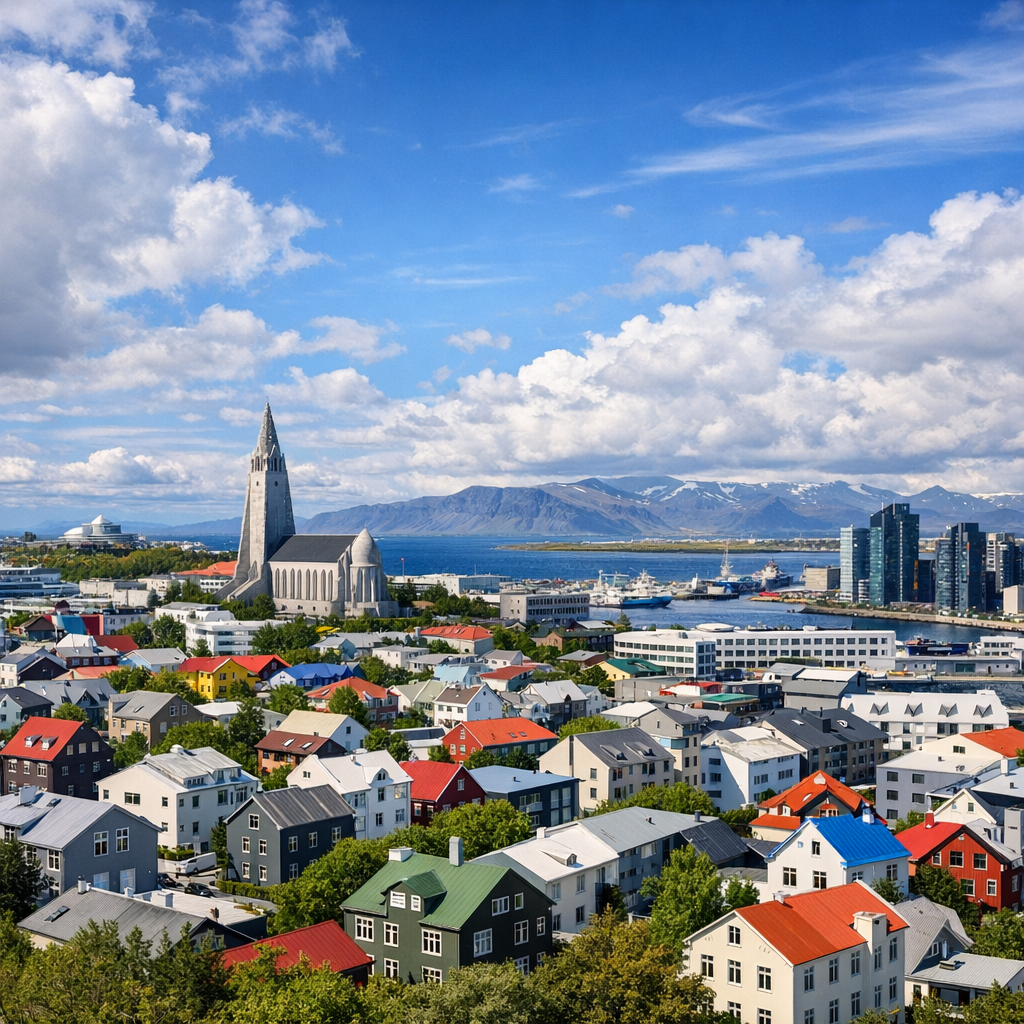
Reykjavík’s climate is a fascinating blend of subarctic oceanic influences, resulting in mild winters and cool summers. This unique weather pattern is shaped by the North Atlantic Current, which brings relatively warm waters to our shores, moderating temperatures throughout the year.
Seasonal Variations
In winter, temperatures in Reykjavík average around 0.5°C (32.9°F), with occasional dips below freezing. Snowfall is common, but the city’s coastal location often leads to rapid melting. Summers are cool, with average highs around 13°C (55°F), and temperatures rarely exceeding 20°C (68°F). This coolness is due to maritime winds and our exposed west coast location.
Daylight Extremes
One of the most striking aspects of Reykjavík’s climate is the dramatic variation in daylight. From late May to late July, we experience nearly continuous daylight, with the sun barely dipping below the horizon. Conversely, from early December to early January, daylight is limited to just a few hours, with the sun climbing only a few degrees above the horizon.
Wind and Precipitation
Wind is a defining feature of our weather. Reykjavík’s coastal position makes it prone to gales, especially in winter, with average wind speeds around 18 km/h (11 mph). Precipitation is fairly evenly distributed throughout the year, with Reykjavík receiving approximately 830 mm (32.7 inches) annually. Rain is more common than snow, particularly in the milder coastal areas.
Adapting to the Climate
As locals, we’ve learned to embrace our city’s unpredictable weather. Dressing in layers is essential, allowing us to adjust to sudden changes. The saying, “If you don’t like the weather, wait five minutes,” reflects our experience of rapid shifts between sun, rain, and snow.
Understanding and adapting to Reykjavík’s unique climate is part of what makes living here so special. By staying informed and prepared, we can fully appreciate the beauty and challenges our environment offers.