

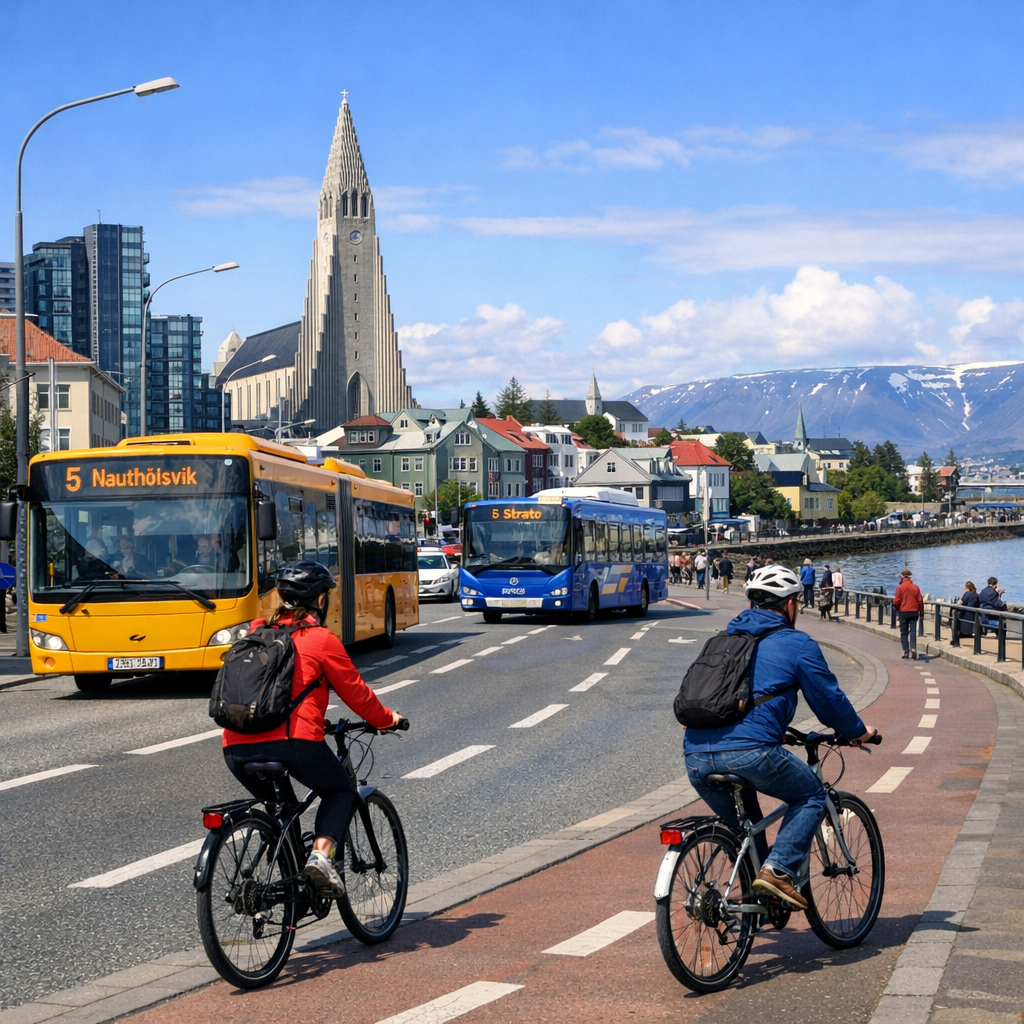
Reykjavík has set an ambitious goal to achieve carbon neutrality by 2030. This commitment is outlined in the city’s Climate City Contract, which encompasses 15 actions with 18 participants, all dedicated to reducing greenhouse gas emissions and enhancing residents’ quality of life.
Key Focus Areas
Transportation
Transportation is a significant contributor to Reykjavík’s carbon footprint, accounting for 52% of greenhouse gas emissions. Efforts are underway to promote changes in travel modes and strengthen infrastructure for public transportation, pedestrians, and cyclists.
Energy Transition
The city is facilitating the transition to cleaner energy sources in vehicle fleets and ships, aiming to reduce reliance on fossil fuels.
Waste and Circular Economy
Initiatives are in place to increase sorting, recycling, and reuse, moving towards a more sustainable waste management system.
Construction Sector
With ambitious residential development goals, it’s crucial that this growth has minimal impact on the climate and environment.
Just Transition
Ensuring a fair transition to a carbon-neutral society is a priority, addressing social equity concerns.
Community Involvement
Mayor Heiða Björg Hilmisdóttir emphasized the importance of community engagement in this journey. She highlighted the need to look at the whole picture, create a healthier environment, and a more vibrant city with more options, thereby improving residents’ quality of life. Changing habits is a challenge, and this journey requires courage and determination.
Residents have actively participated in discussions, expressing concerns and suggestions. For instance, during a resident forum in Vesturbær, attendees called for better infrastructure for cyclists and pedestrians, with many noting they do not own a car. They also discussed the need for improved public transportation connections and a review of the current paid parking policy in residential areas.
Challenges Ahead
While the city has made strides, challenges remain. Public consultations have revealed suggestions to cut spending and revise the city’s transportation agreement, including the Borgarlína bus rapid transit project. Some residents advocate for reducing the number of city councillors and decreasing outsourcing to private contractors.
Balancing these concerns with the city’s climate goals requires careful consideration and ongoing dialogue between the city council and residents.
Looking Forward
Reykjavík’s commitment to carbon neutrality is a collective effort. By addressing transportation, energy, waste, and construction challenges, and ensuring community involvement, the city aims to create a sustainable and vibrant environment for all residents.