

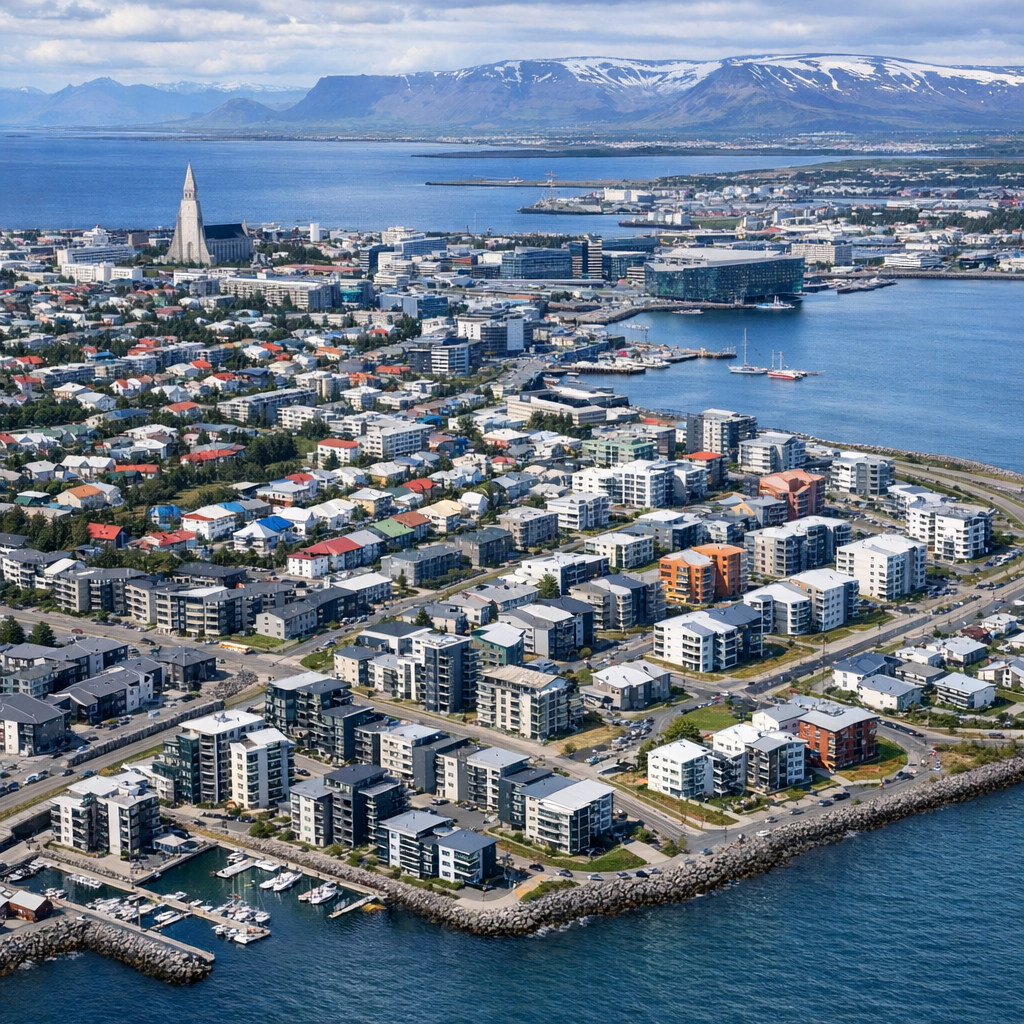
Reykjavík’s real estate market is experiencing notable changes, with shifts in property prices, rental patterns, and ongoing development projects shaping the city’s housing landscape.
Market Trends
Recent data indicates a cooling in the housing market. In May, house prices declined by 0.4% month-on-month, marking the first decrease of the year. This downturn is primarily attributed to a 2.9% drop in detached housing prices within the capital area. Conversely, condominium prices in greater Reykjavík saw a modest increase of 0.3% during the same period. This trend suggests a divergence in demand between different property types.
Additionally, the number of apartments available for sale has risen significantly. As of early April, nearly 6,200 apartments were on the market, an increase of over 1,800 compared to the previous year. This surge in supply, coupled with reduced market activity, has led to longer selling times and a growing inventory.
Rental Market Dynamics
The short-term rental sector in Reykjavík remains robust. As of June, there were 3,986 active short-term rental listings, each earning an average annual revenue of $25,200. Despite a 16.4% year-over-year decrease in active listings, the average daily rate has risen by 5.3% to $255, indicating sustained demand in the short-term rental market.
Development Projects
Several development projects are underway to address housing needs and urban growth:
- Sóleyjatún Masterplan: This low-rise, pedestrian-friendly housing scheme in Grafarvogur focuses on providing diverse housing options, including for empty nesters, first-time buyers, and young families. The plan emphasizes green spaces and community engagement.
- Weather Hill: Located centrally in Reykjavík, this project aims to create a sustainable neighborhood with varied building volumes, promoting a dense and lively community for residents of all ages.
- FABRIC: Proposed for the Lágmúli area, this mixed-use development integrates co-living housing, shared workplaces, and public spaces, fostering communal living and working environments.
- Keldur: Designed to accommodate 10,000 residents and 5,000 workplaces, Keldur is structured as a mosaic of landscapes and communities, each with its unique character, promoting a harmonious blend of nature and urban living.
These projects reflect a concerted effort to enhance Reykjavík’s housing infrastructure, catering to a diverse population while promoting sustainable and community-focused living environments.
As Reykjavík’s real estate market continues to evolve, staying informed about these trends and developments is crucial for prospective buyers, renters, and investors navigating the city’s dynamic housing landscape.