

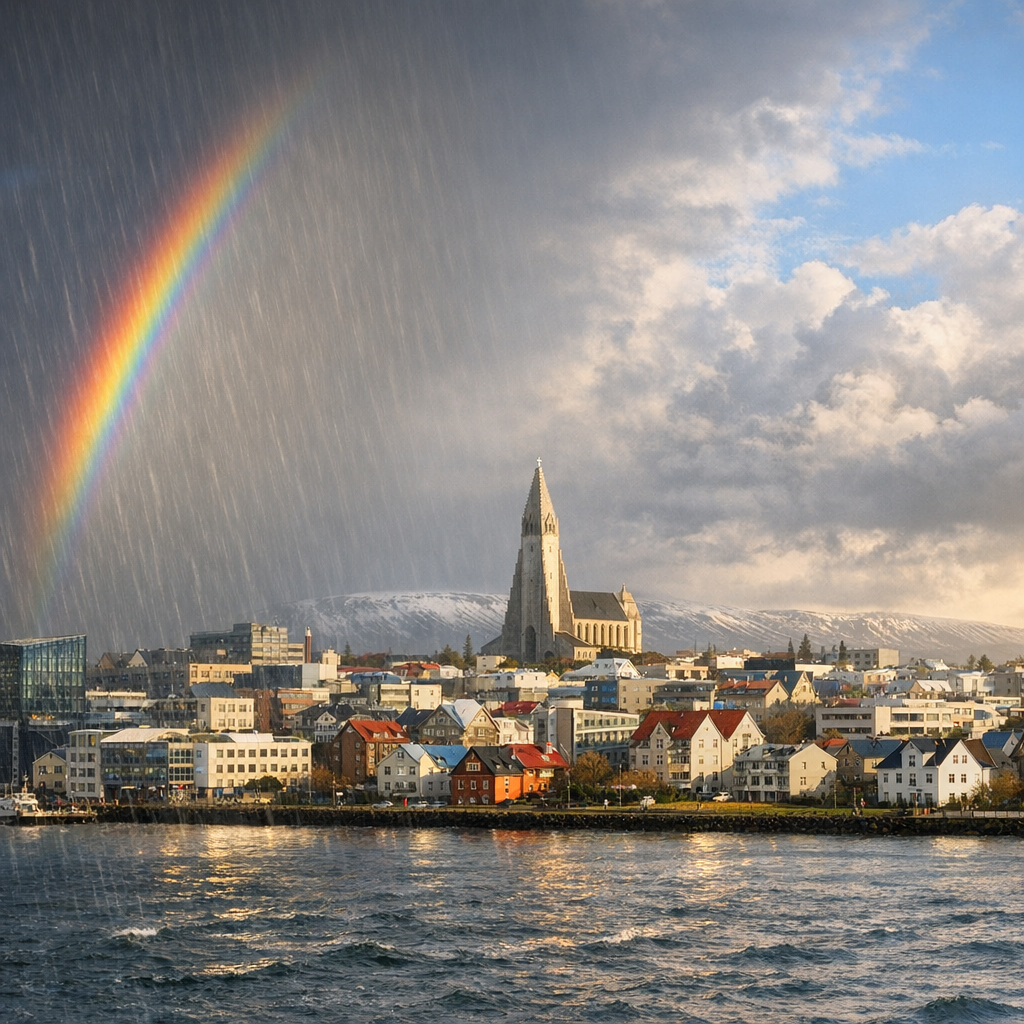
The Maritime Influence: Mild Temperatures & Ocean Currents
Despite being at about 64°N, Reykjavík enjoys winters that are far milder than many places at similar latitudes. Thanks to the North Atlantic Current (an extension of the Gulf Stream), winter temperatures frequently hover near freezing rather than plunging deep into negative extremes. Summers remain cool and rarely climb past the mid teens Celsius. This maritime influence smooths out what might otherwise be wild seasonal swings.
Rain, Wind, & Weather Variability
Rain is a common companion in Reykjavík—on average about 147 days a year see at least 1 millimeter of rain. Wind adds a sharp edge to the feel of a day, especially in winter. Umbrellas are rarely sufficient; locals rely on waterproof, windproof garments more often than any gadget. And while temperatures might be steady, the weather can shift quickly—sun, rain, sometimes snow, within minutes.
Daylight Extremes: Long Summer Days & Dark Winters
One of Reykjavík’s most defining traits isn’t the temperature but the swing in daylight. From late May to late July, daylight lasts nearly 24 hours; conversely, early December to mid-January offers only about four to five hours of daylight. These shifts profoundly affect daily life—lighting, energy use, mood, and even what activities are possible outdoors.
Climate Trends & Environmental Commitments
Reykjavík is not just adapting to its environment—it’s aiming to lead. The city has set a goal to become carbon neutral by 2030, part of a broader Climate City Contract that will reduce emissions by about 400,000 tonnes of CO₂ equivalent annually compared to 2019 levels. In 2024, total greenhouse gas emissions in the city were estimated at ~614,000 tonnes, with significant contributions from waste treatment. Meanwhile, data show that in recent years Reykjavík’s annual mean temperature has already risen by around 1°C above its 1991–2020 average.
Why This Matters for Everyday Life
Understanding these patterns helps residents plan daily life: what to wear, when to expect more rain, when evenings stay light, and what impacts climate change may bring. For visitors, it means packing layers, being ready for sudden wind or showers, and choosing times of year with more daylight if exploring outdoors. For the city—and for citizens—these insights inform policy decisions about energy, infrastructure, and resilience. Reykjavík’s environment shapes the character of the place, and in return, we all shape its future.